Textile as an Independent Language
Although Brit Fuglevaag’s works may often appear spontaneous, she worked carefully with sketches before beginning to weave. This distinguished her from several international contemporaries who created works in which textile functioned as a substitute for painting. For Fuglevaag, the textile itself was the medium of expression, where the textile language carries the work and cannot be replaced by other materials.
Education and Early Influences
Fuglevaag’s early experiences played a crucial role in shaping her development after her formal education. During a short stay at Sellgren’s factories in 1957–58, she gained insight into more unconventional ways of working with traditional rugs. In 1960, she learned gobelin weaving in Denmark under Jan Groth. These experiences prepared her well when she began at the Academy of Fine Arts in Warsaw, where she worked within the tradition of tapestry. There, she developed a freer technical approach, with greater emphasis on the expressive possibilities inherent in the textile material itself.
In Norwegian art history, Brit Fuglevaag is often strongly associated with her study period in Warsaw in 1963–64. However, she herself perceived the importance of this education differently:
“I was not particularly influenced by Polish tapestry, but by international textile art, by painting and sculpture and pop art. I did not bring Polish textile art to Norway, as some have claimed. I brought myself to Norway after first studying and then working and exhibiting for seven or eight years abroad. What I brought with me to Norway were international tendencies combined with my own distinctive use of colour and material.”
(Brit Fuglevaag in Billedtepper 1963–2003)
Rather, the stay and education in Warsaw can be seen as significant because they continued a development she had already begun a few years earlier: loosening her relationship with traditional techniques and expressions in tapestry, which can be understood as a shift toward a non-figurative language.
Transition to a Non-Figurative Visual Language
The experience in Warsaw primarily contributed to a new understanding of technique, which was not entirely unexpected. Already during her studies in Oslo, Fuglevaag and several fellow students maintained close contact with fine artists at the Art Academy. As a result, composition and visual expression gradually became as important in textile art as in painting.
After returning from Poland, she began producing works with an abstract visual language. By combining different techniques such as tapestry, gobelin, and kilim, she created works with rich surfaces and distinct structures. The works often evoke associations with nature and clearly situate her within Norwegian modernism.
Following her debut in 1965–66, her work received positive attention, particularly from critics within the field of fine art. She was also well received among artists, and in 1967 she was selected to represent Norway at the Youth Biennale in Paris.
Experimentation with Materials
The 1960s marked an important period for experimental textile art in Europe, influenced in part by developments in American art. During a stay in Paris in 1967–68, Fuglevaag encountered artists such as Robert Rauschenberg and Christo, who worked with material-based expressions. She was also influenced by sculpture.
Fuglevaag herself believed that developments in visual art could just as easily have been realized in textile. During this period, she experimented with materials such as plastic and sisal. These materials were affordable and well suited for experimentation, while also representing a conscious effort to expand the boundaries of what textile art could be.
The result included the so-called sisal works, exhibited around 1969–70. These works feature strong, relief-like structures, created by wrapping and knotting the material. Some pieces also developed a pronounced spatial dimension, such as Huldra, where elements extend outward into the viewer’s space.
In Norway, the sisal works were often seen as influenced by Polish textile art, while in Poland they were regarded as quite unusual. In retrospect, it is clearer that they belong within a broader international development in material-based art. This sisal phase nevertheless represents a key moment in Fuglevaag’s work, as she explores themes of nature and vitality. The works demonstrate how textiles can express growth, process, and life.
Work with Architecture and Space
In the early 1970s, Fuglevaag returned to wool and began working more actively with colour. This resulted in a series of works known as the “Spindel” motifs. Here, she developed a visual language composed of colourful, twisted wool forms that create movement and vitality across the surface.
These works were often conceived in relation to architecture, and she received several commissions where the spindel-motifs played a significant role.
Later Development and Relation to Tradition
Around 1980, Fuglevaag entered a new phase, for example with the decorative project Søndeled for the Supreme Court. This work combines experimentation and tradition. The spindel elements remain present but more subdued, while the main motif consists of elongated forms moving rhythmically across the surface.
During this period, Fuglevaag moved once again closer to figuration, while remaining firmly rooted in a modern textile tradition. This resulted in a more personal and complex artistic expression.
A Midsummer Night’s Dream (1988)
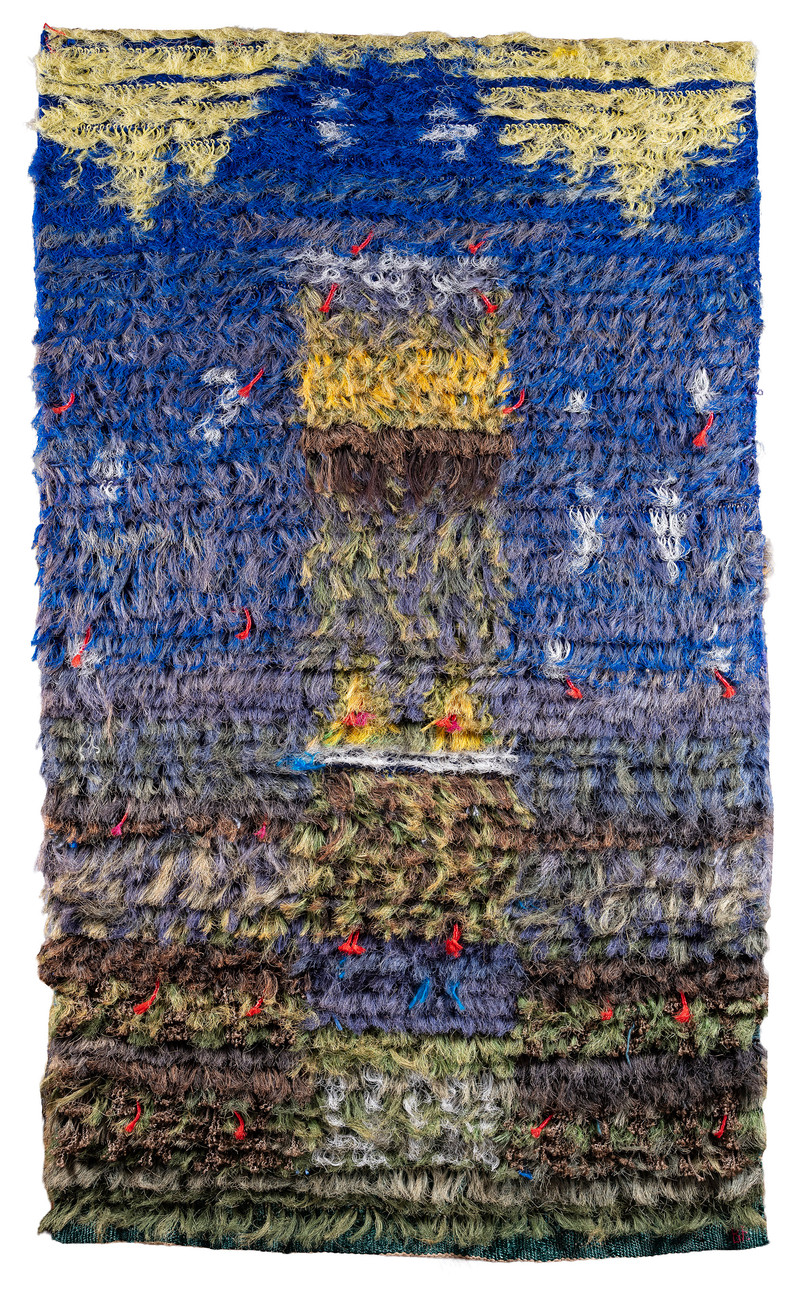
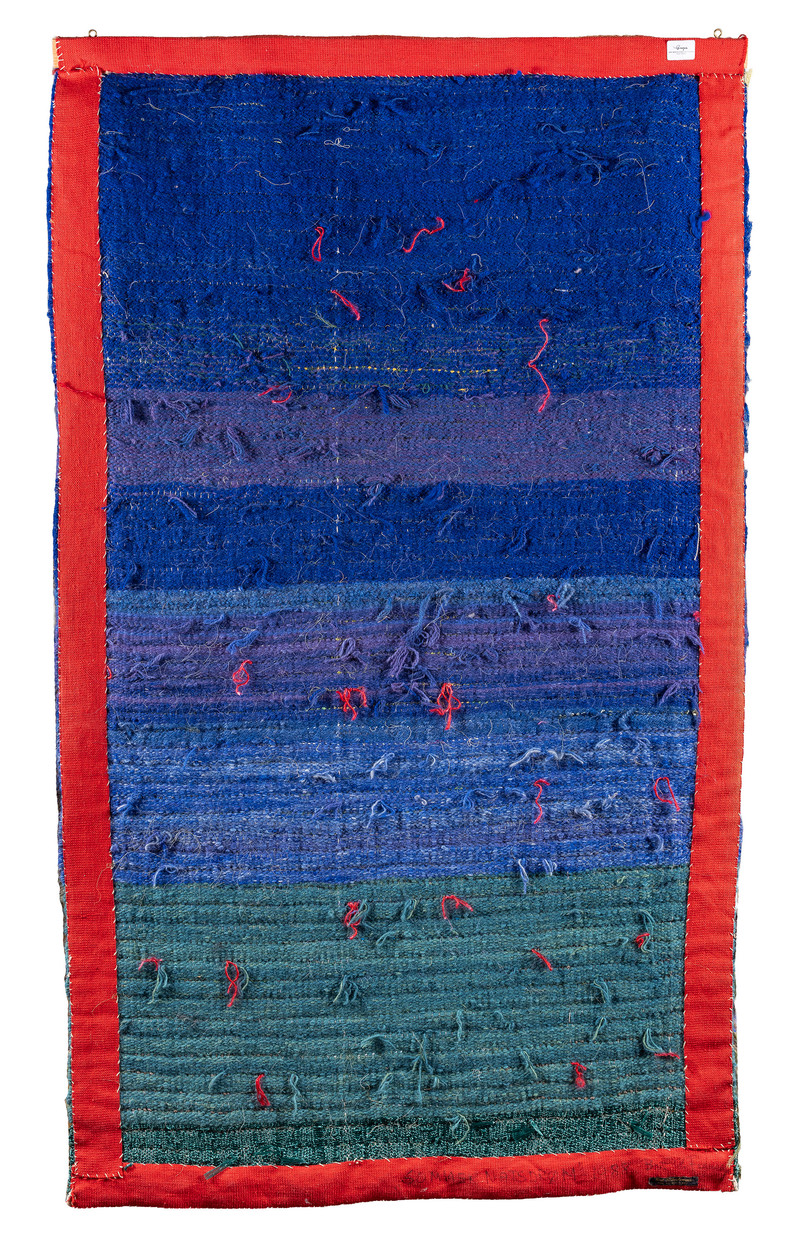
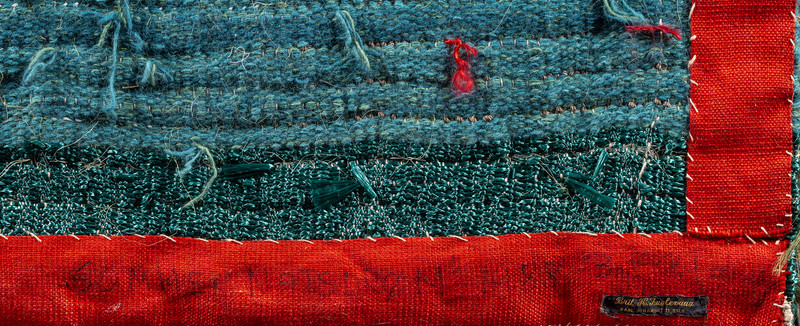
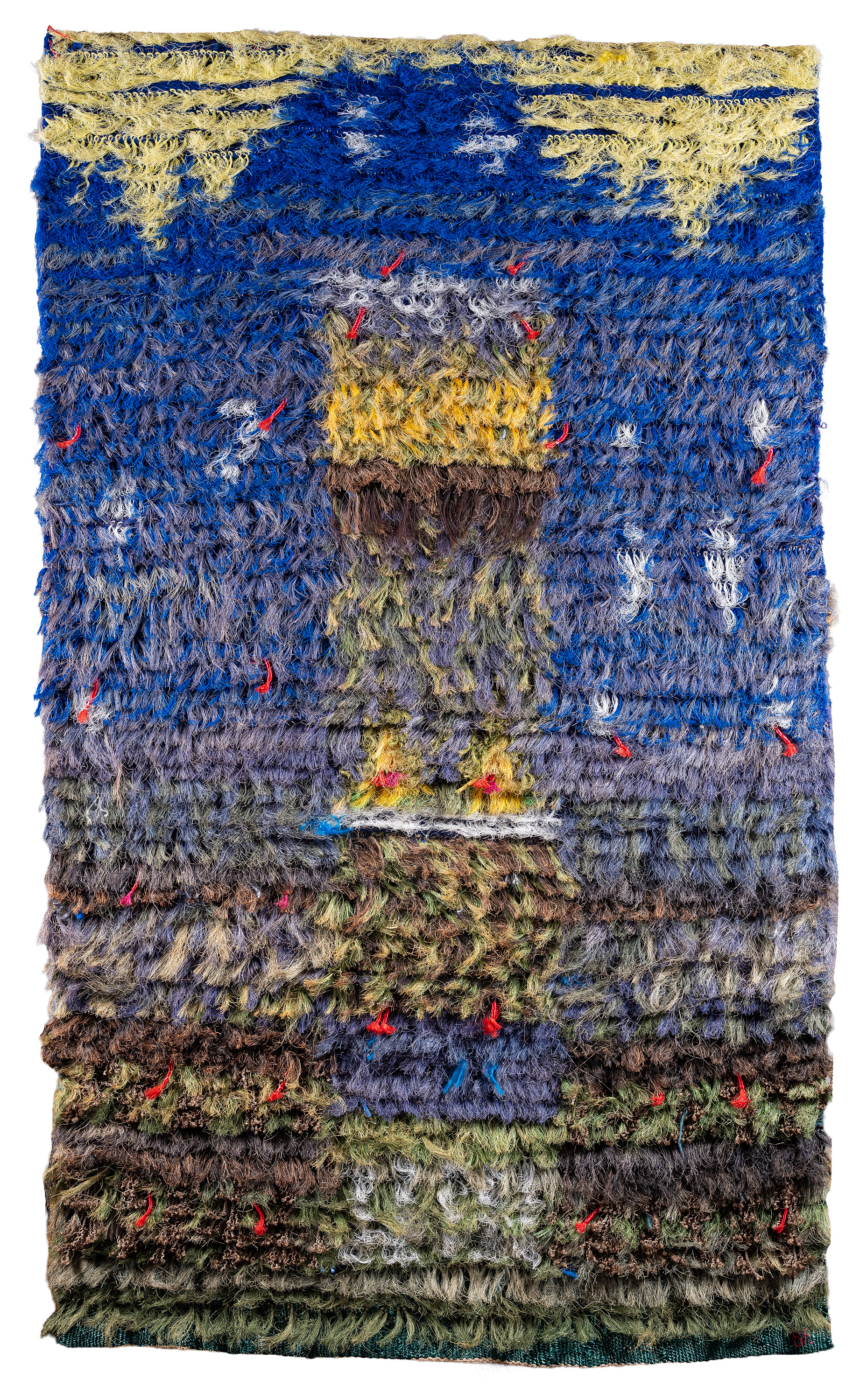
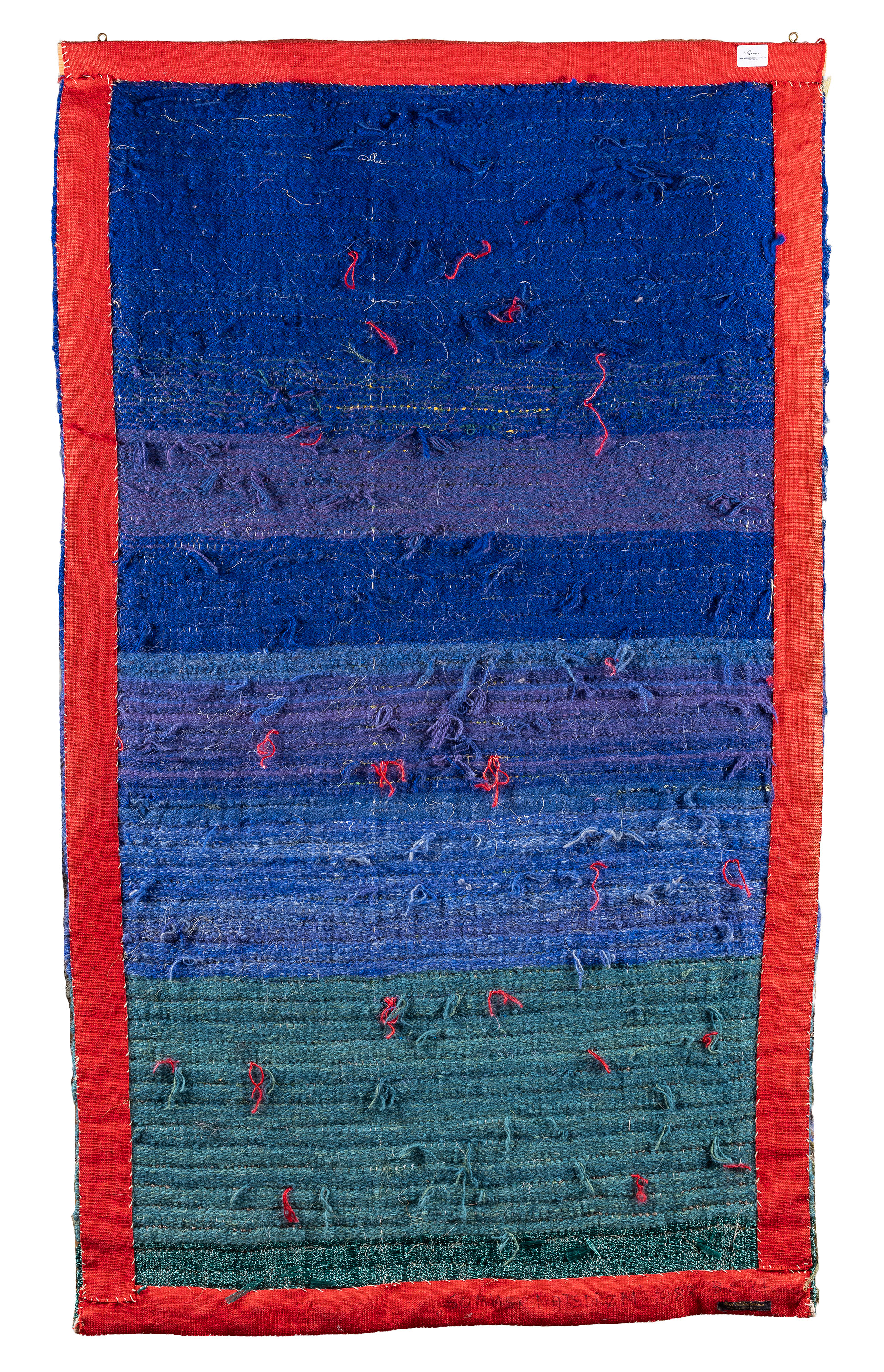
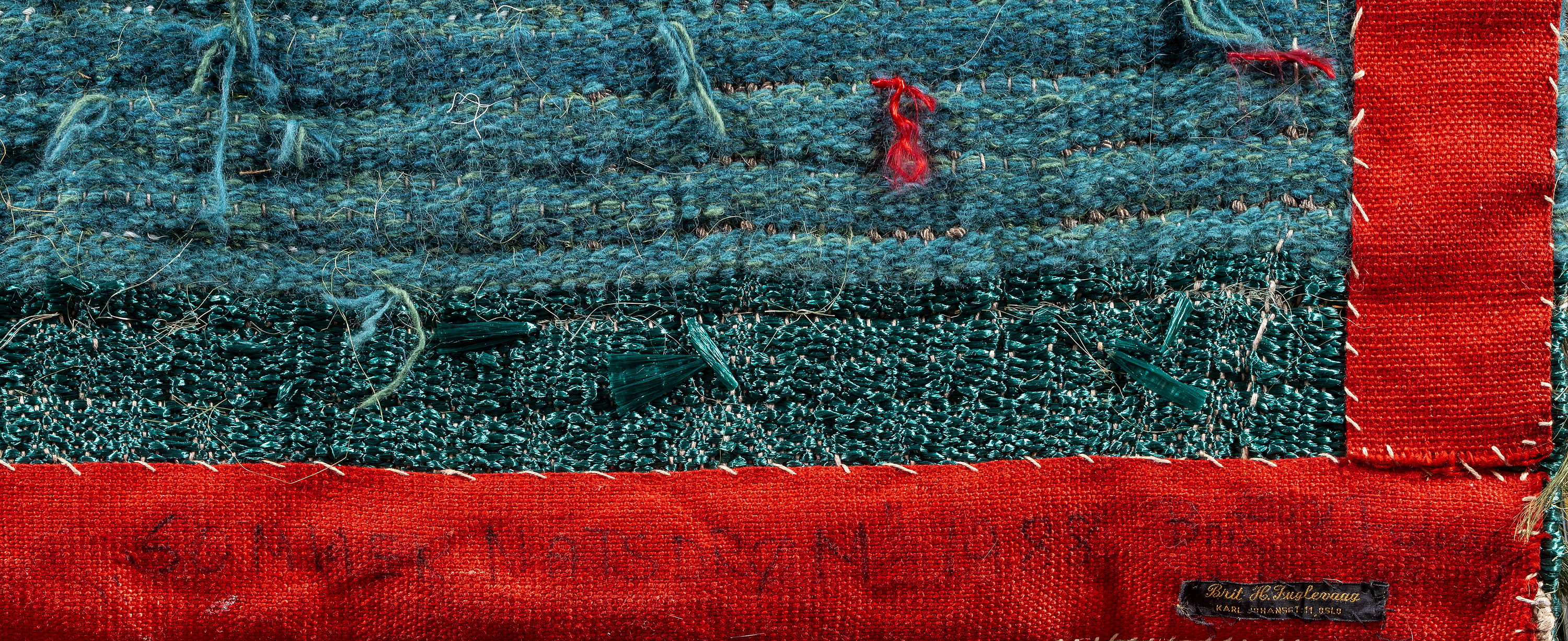
A Midsummer Night’s Dream (1988) demonstrates how Fuglevaag prioritizes materiality over motif. The work is free of clear figures or ornamentation, yet full of tension on the surface due to the weaving technique. It can be understood as an exploration of material and structure, experienced as a relief or a sculptural presence in space.
The title evokes clear associations with the Scandinavian mood landscapes familiar from late nineteenth-century painting, while at the same time appearing as an abstract and distinctly modern expression.