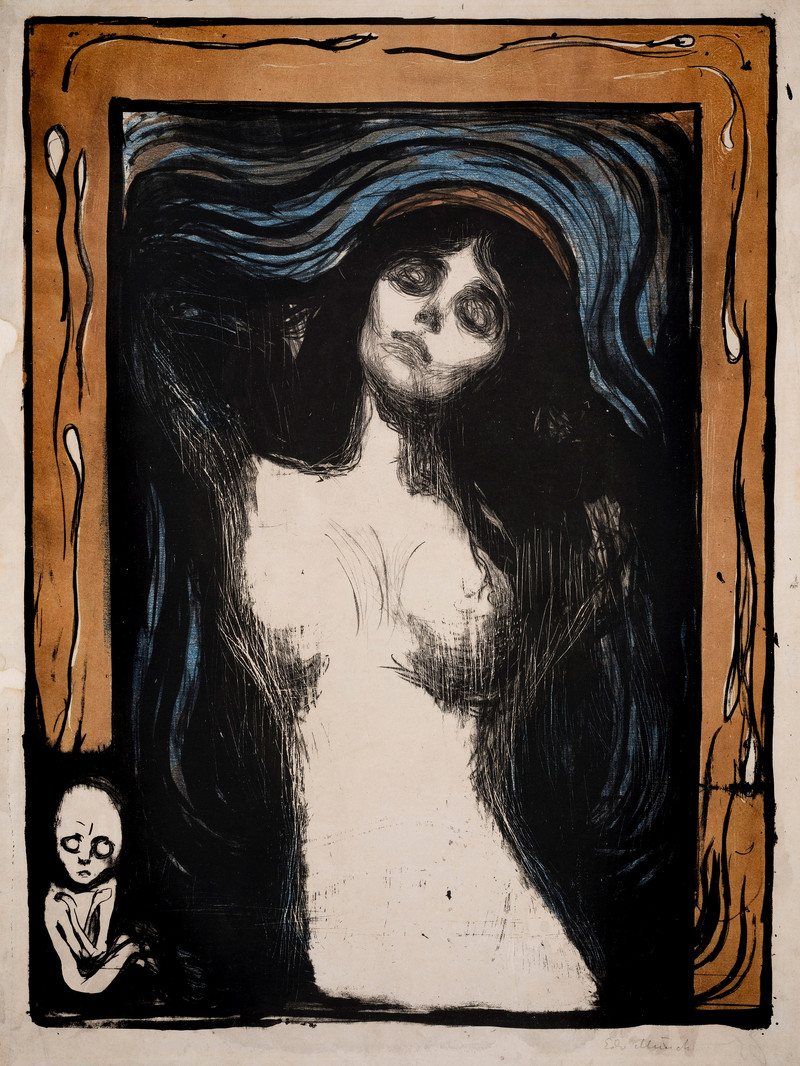
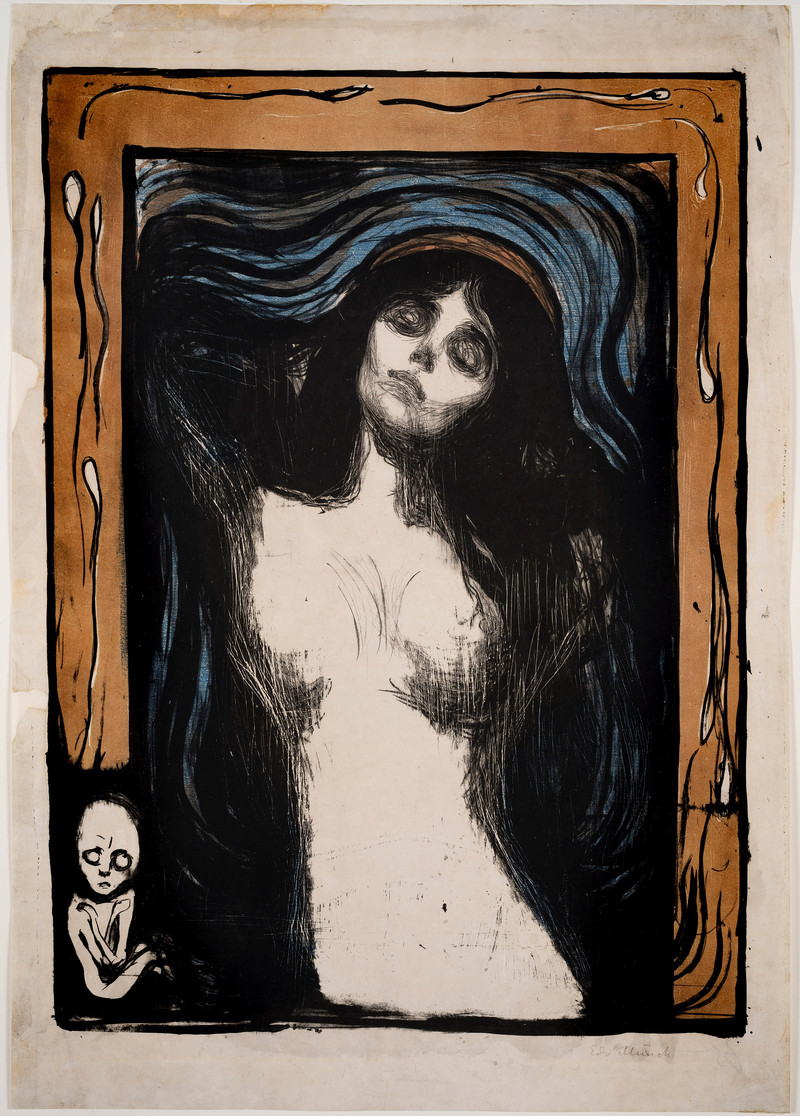
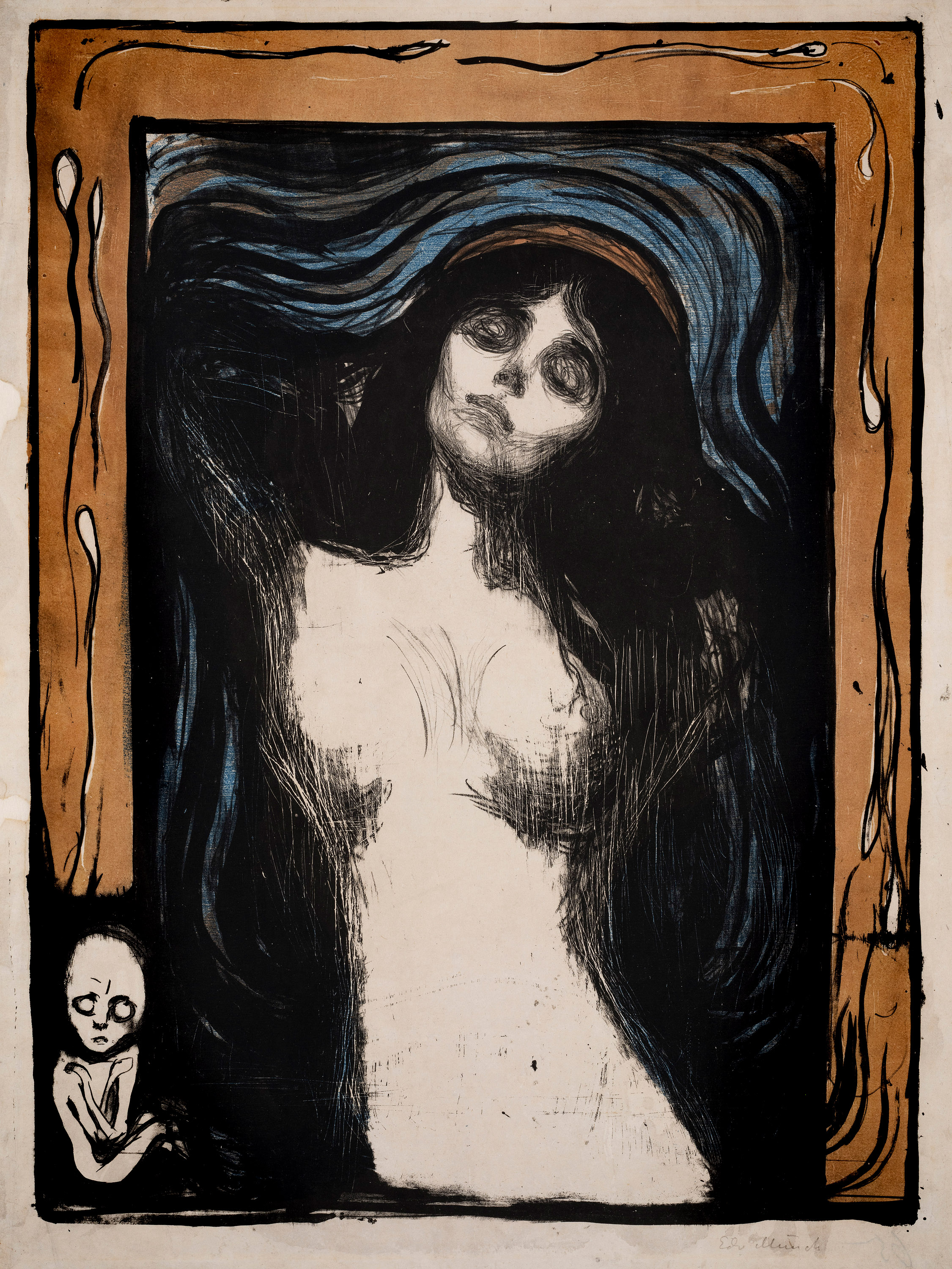
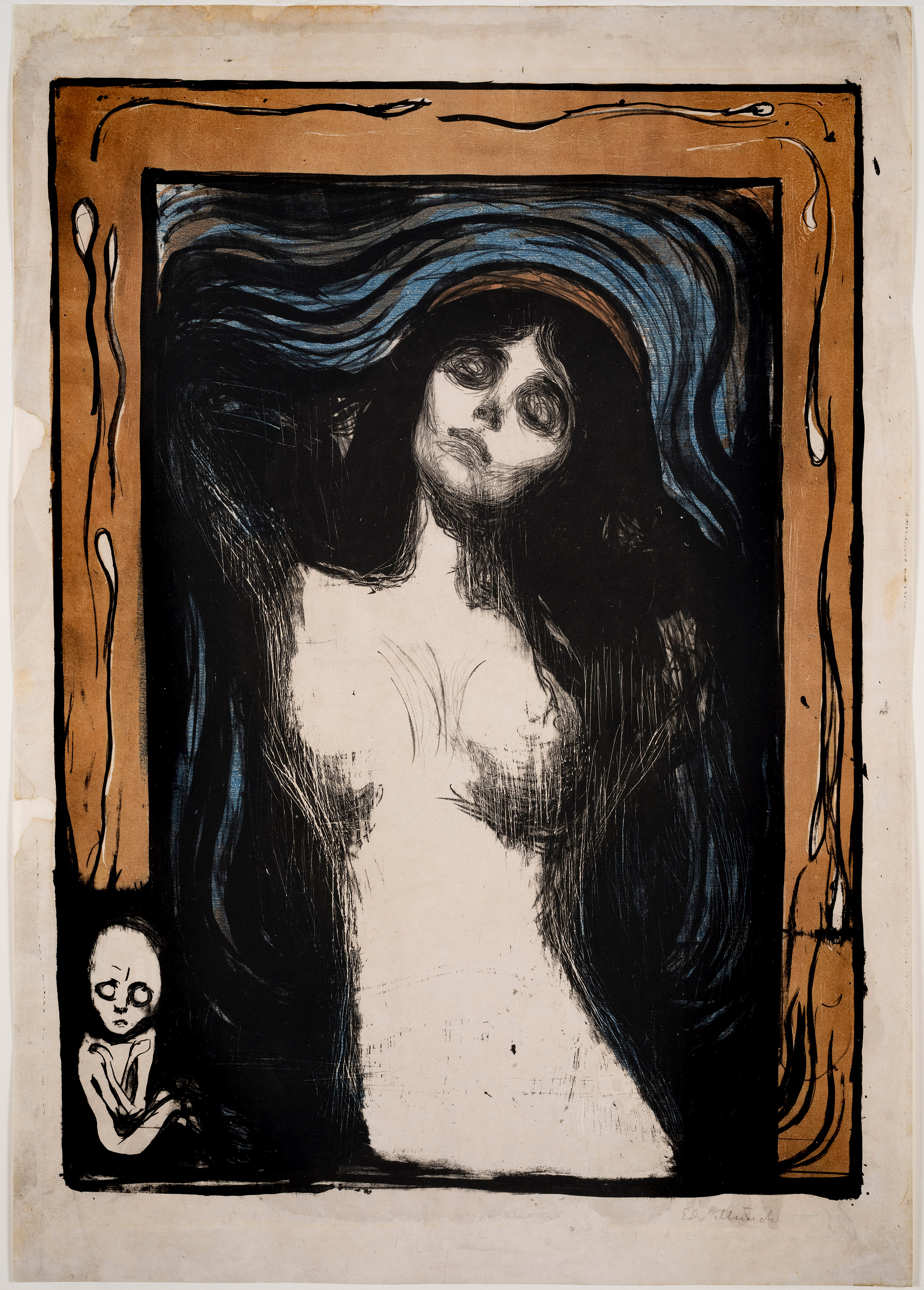
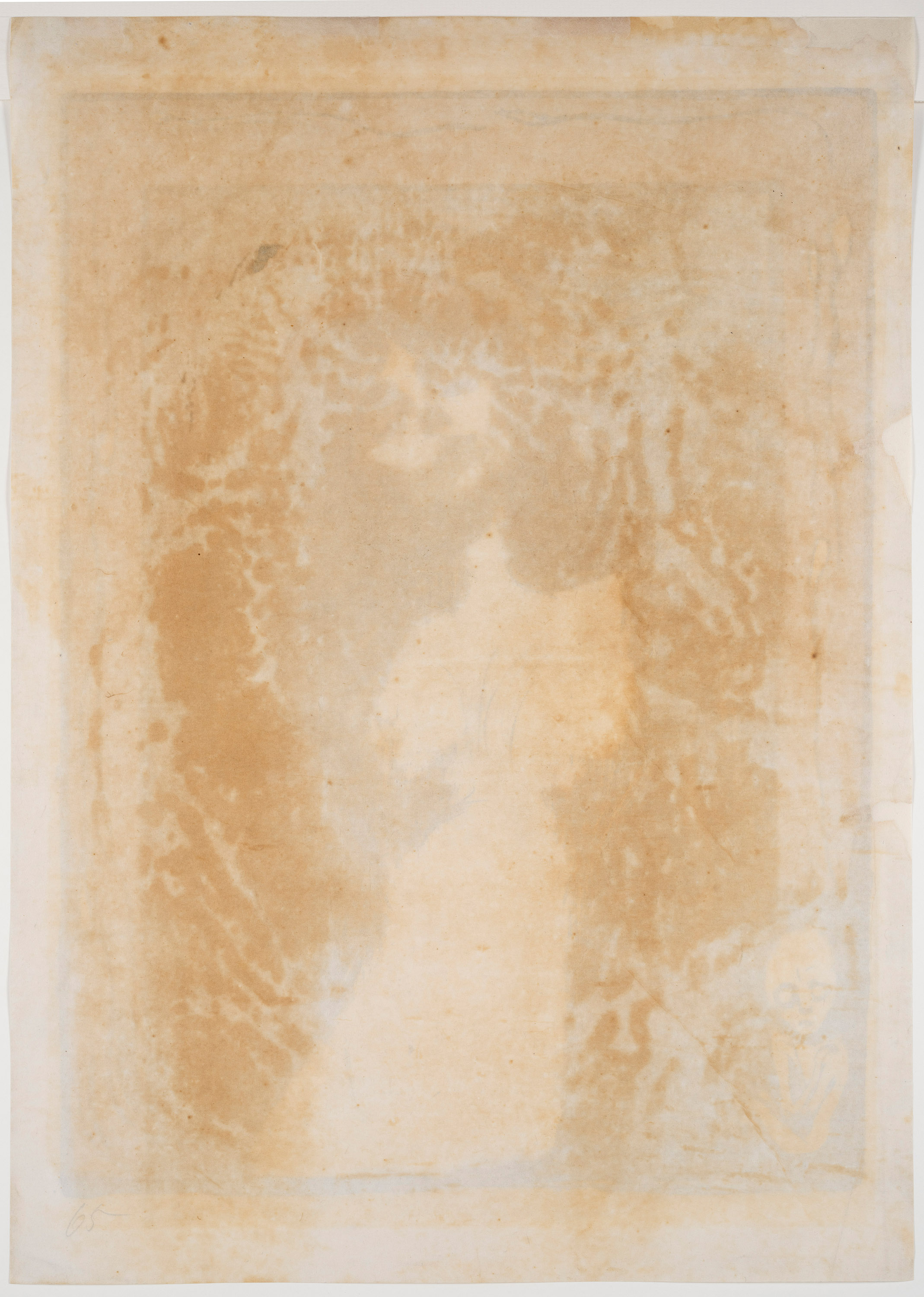
Madonna (1895/1902)
The Madonna motif has been a recurring theme throughout Western art history, particularly within Christian iconography and visual tradition. Typically, such representations depict the Virgin Mary as the holy mother, holding the Christ Child in her lap.
Edvard Munch’s Madonna, however, breaks sharply with this tradition. Instead of portraying a devout virgin, Munch presents a woman in an erotic moment of ecstasy. He described the motif as “the woman who gives herself over and attains a Madonna’s sorrowful beauty.” In this version, Munch has framed the motif with swimming cells and the skeleton of a fetus. The frame reinforces both the biblical association of the Madonna as a bearer of life and the scientific understanding of the moment of conception.
The black-and-white version of Madonna from 1895 was among the first lithographs Munch produced. This technique allowed him to reach a wider audience, including those who could not afford his paintings. After creating the print in black and white, he went on to develop several color versions, initially by hand-coloring each individual print, and later by applying multiple colors simultaneously directly to the printing plate.