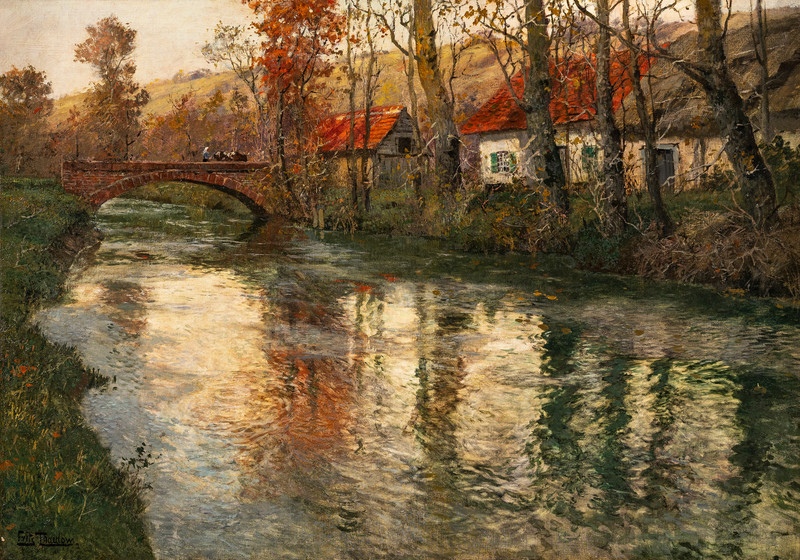
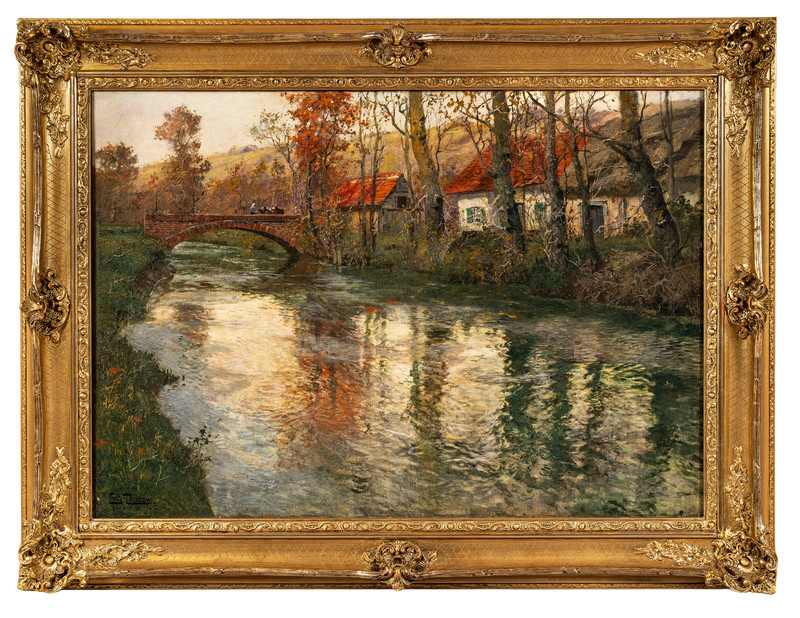
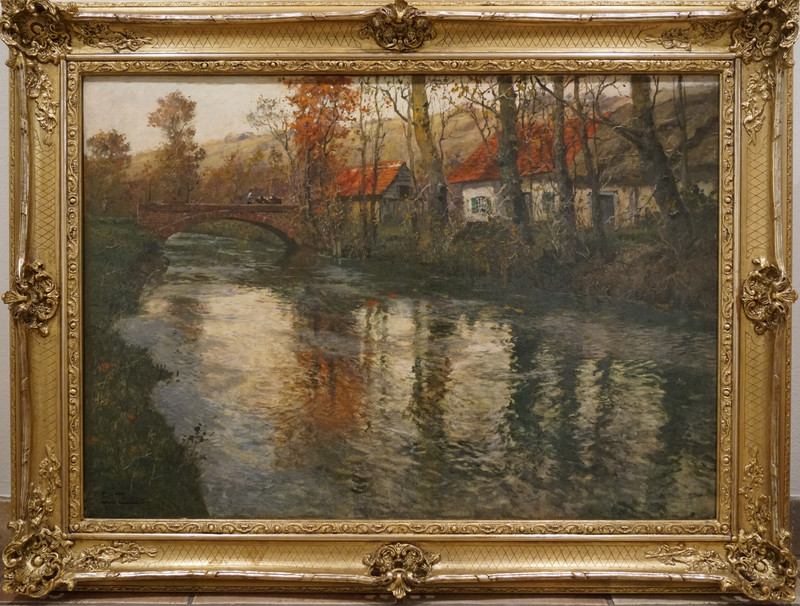
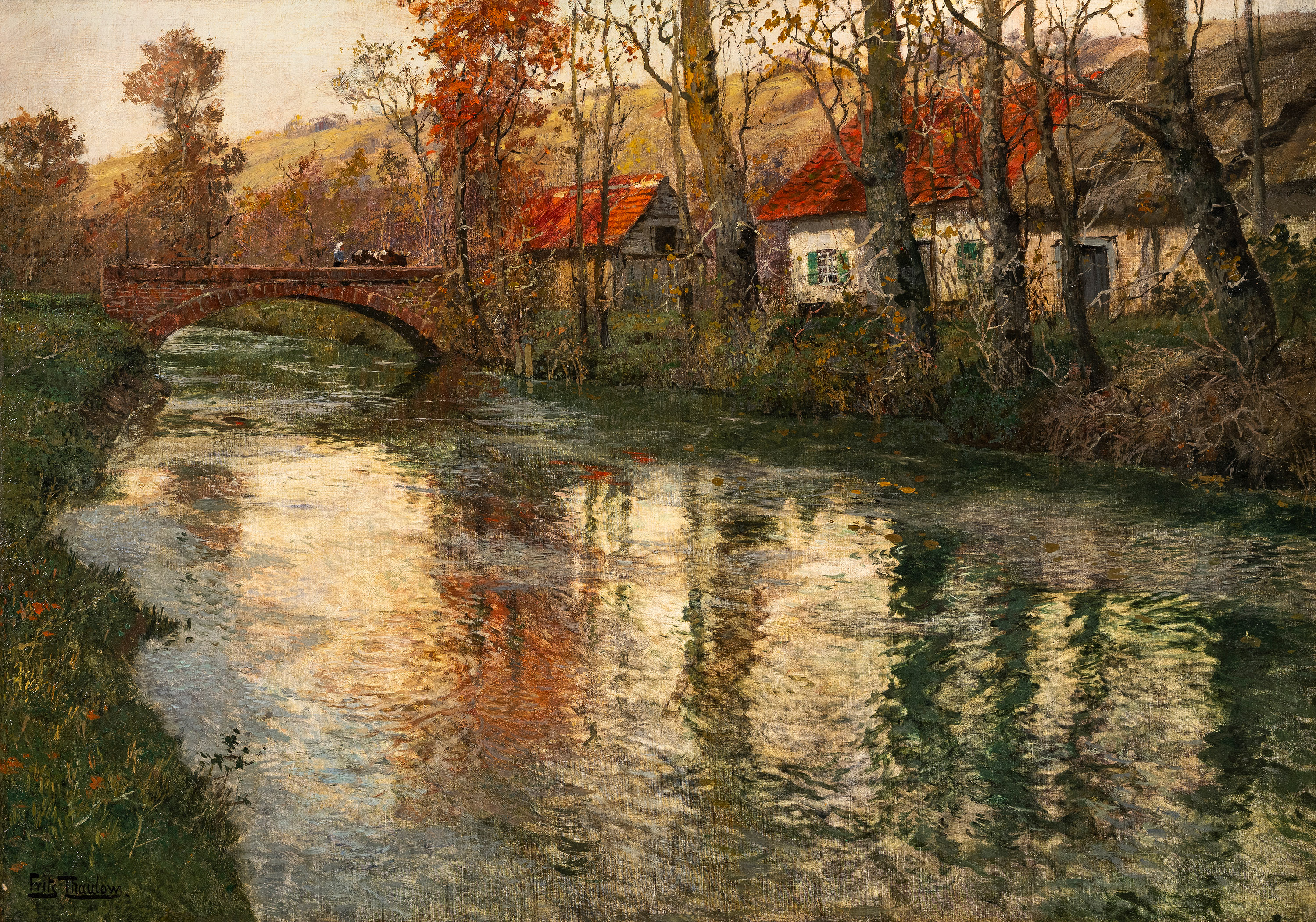
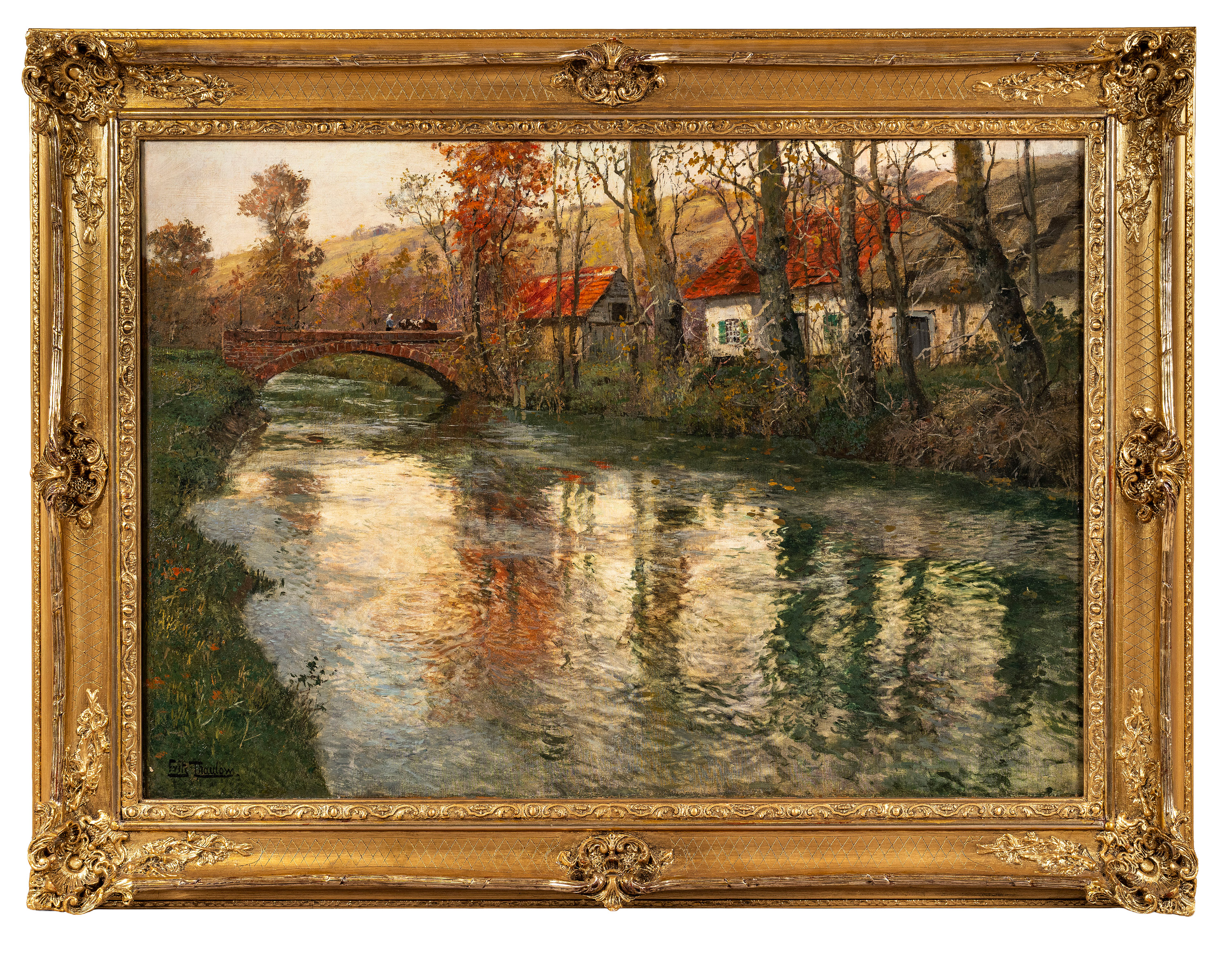
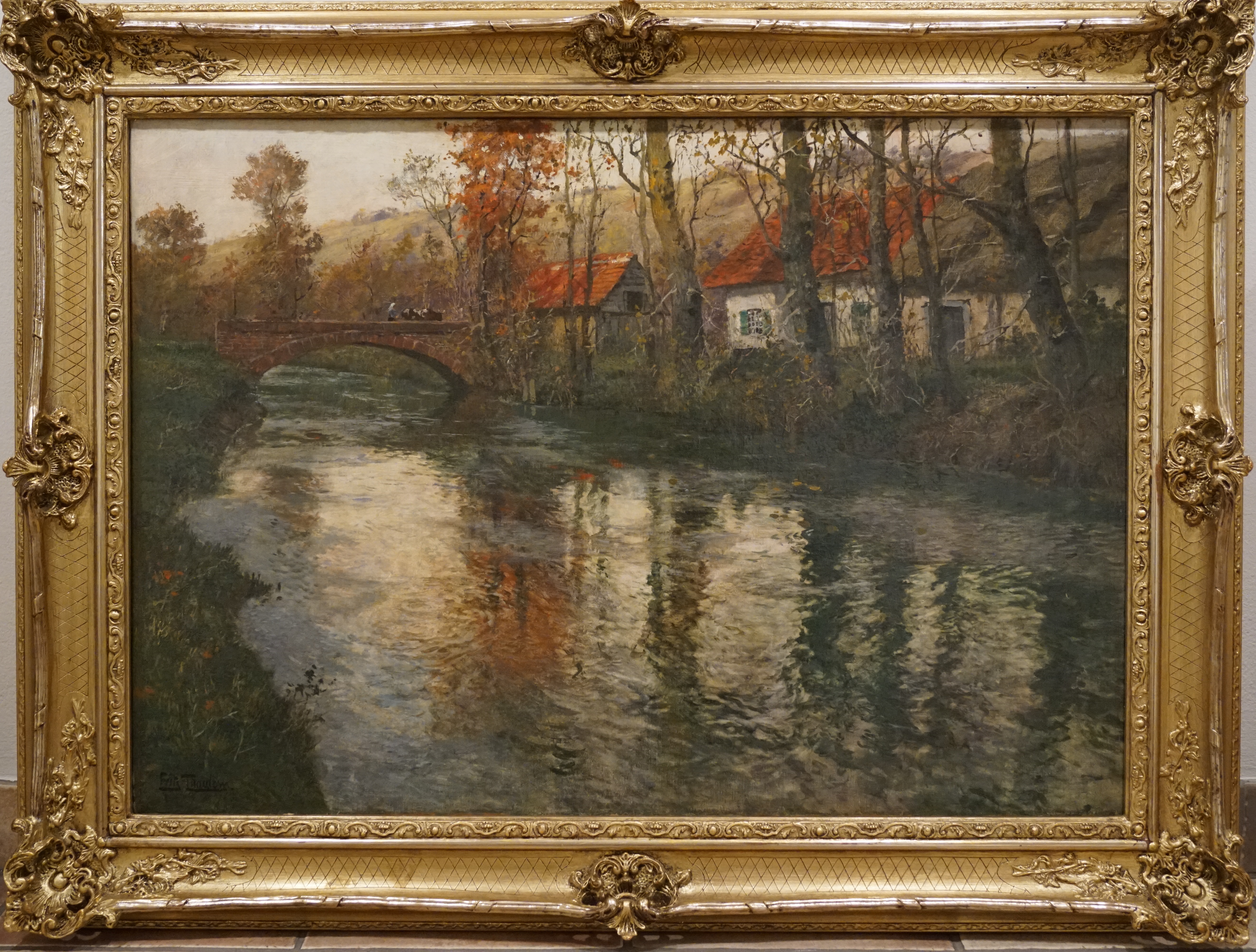
The painting can be dated to around 1897, as it closely resembles a work shown at the Salon du Champ-de-Mars that year, Rivière en Normandie, le petit pont (nuit), no. 1185, which was reproduced in The Studio, special no. 15/6-1897, p. 7. According to Vidar Poulsson, the motif in fact goes back to a painting sold to the Nationalgalerie in Berlin in 1896, then titled Novemberdag i Normandie (A November Day in Normandy; The Studio, London, 15/9-1896). That painting features a slender wooden bridge in the background. This group of motifs ultimately resulted in a colour etching of around 1903, La Rivière.
Many variants of the bridge picture exist, and most were probably painted in 1895–96. B. A. Mathiesen emphasises that “it is evident that the bridge motif becomes a new element in his subjective, symbolic pictorial world. It may sit far back in the pictorial space in a modest position, but it may also assume a leading role, as in the well-known pictures from Kristiania, Ávila, Verona, Amiens and Copenhagen, all from his last ten years as a painter”.
Mathiesen goes on to write that “the principal speciality nevertheless became the French river scenes, from the pompous (the Seine) to the intimate (the Arques). (…) Thaulow’s range of contacts was wide, from the greatest names such as Monet and Auguste Rodin to the many young painters from France, Belgium, England and the USA who became his friends from the summer of 1892 onwards. Most of these young artists found themselves somewhere at the intersection of Impressionism and Symbolism.”
Literature:
Vidar Poulsson, Frits Thaulow, En internasjonal maler, Labyrinth Press.
B. A. Mathiesen, Frits Thaulow (1847–1906), 1992.