The Rooster
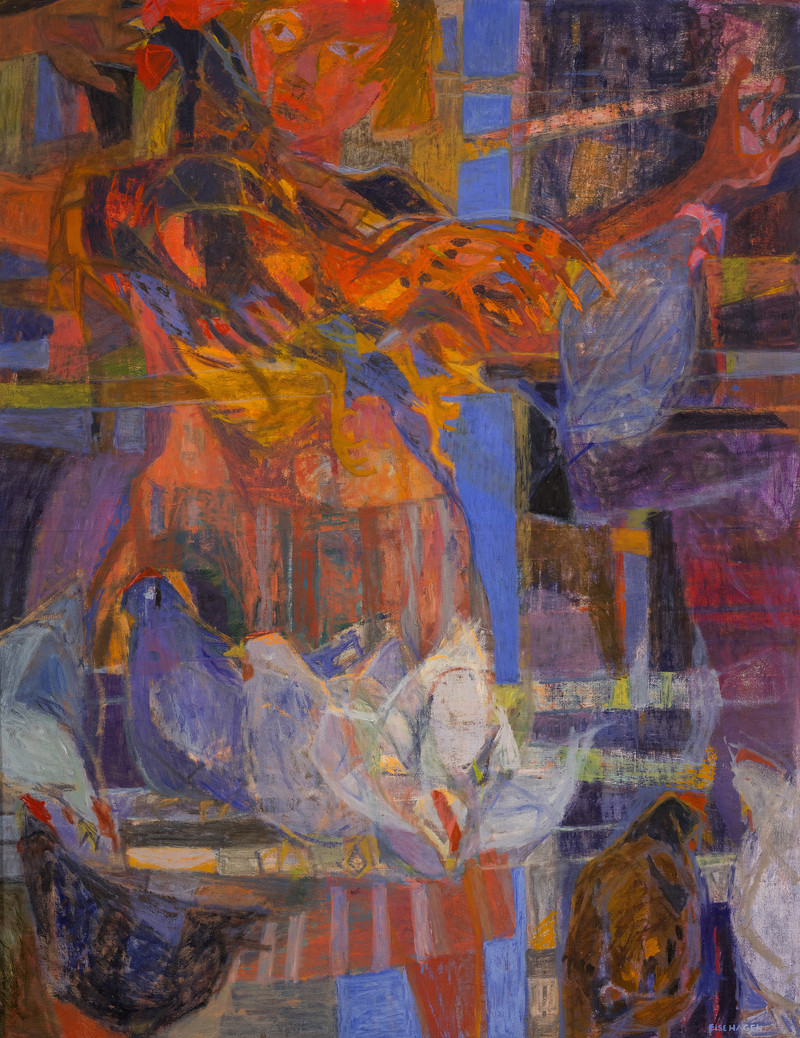
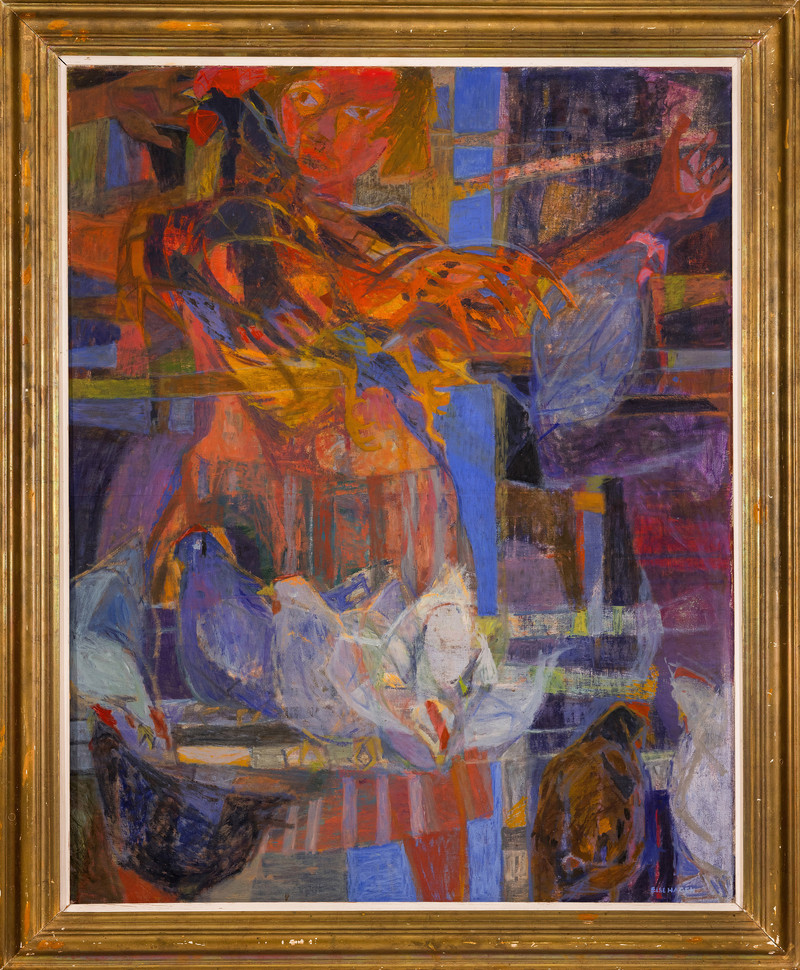
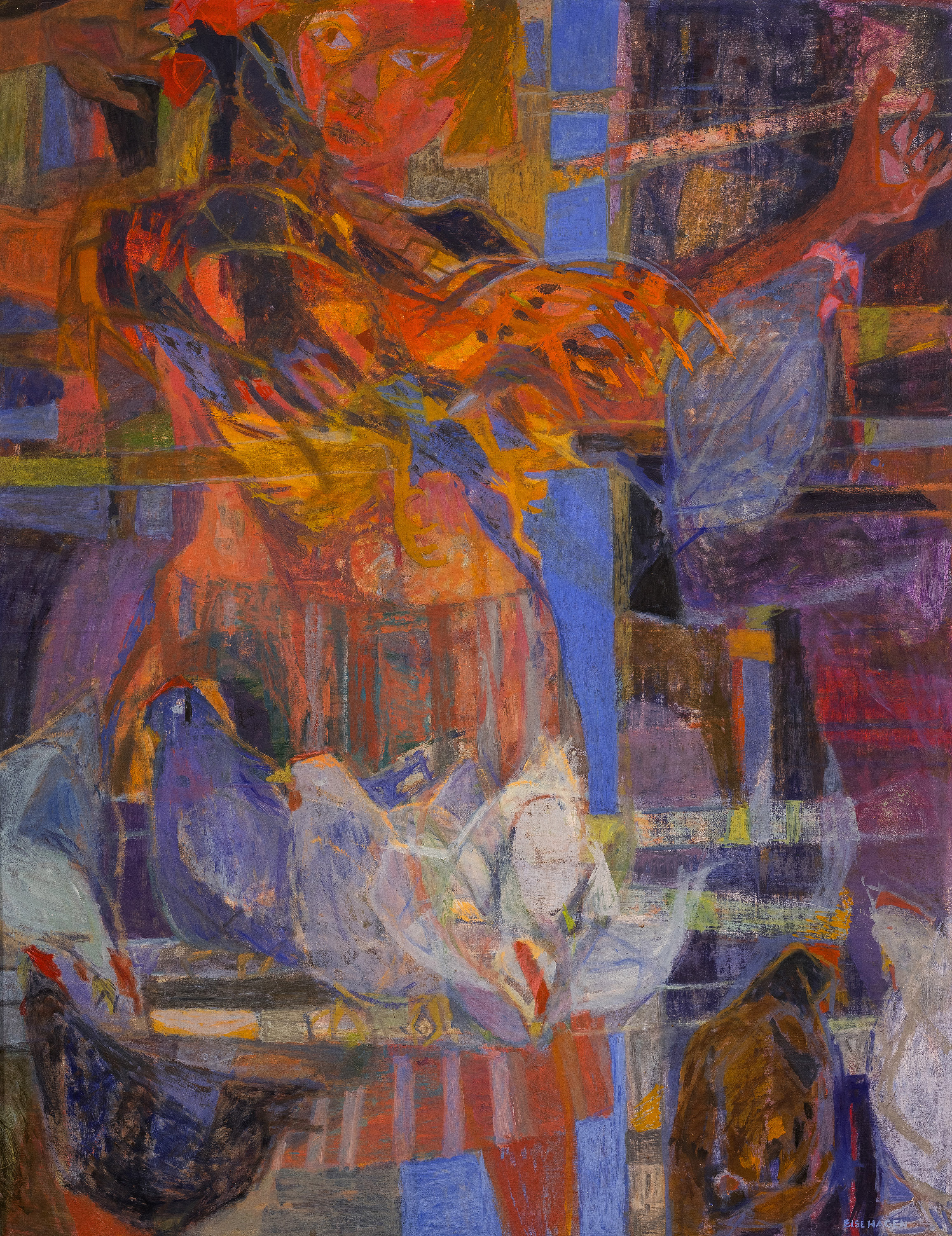
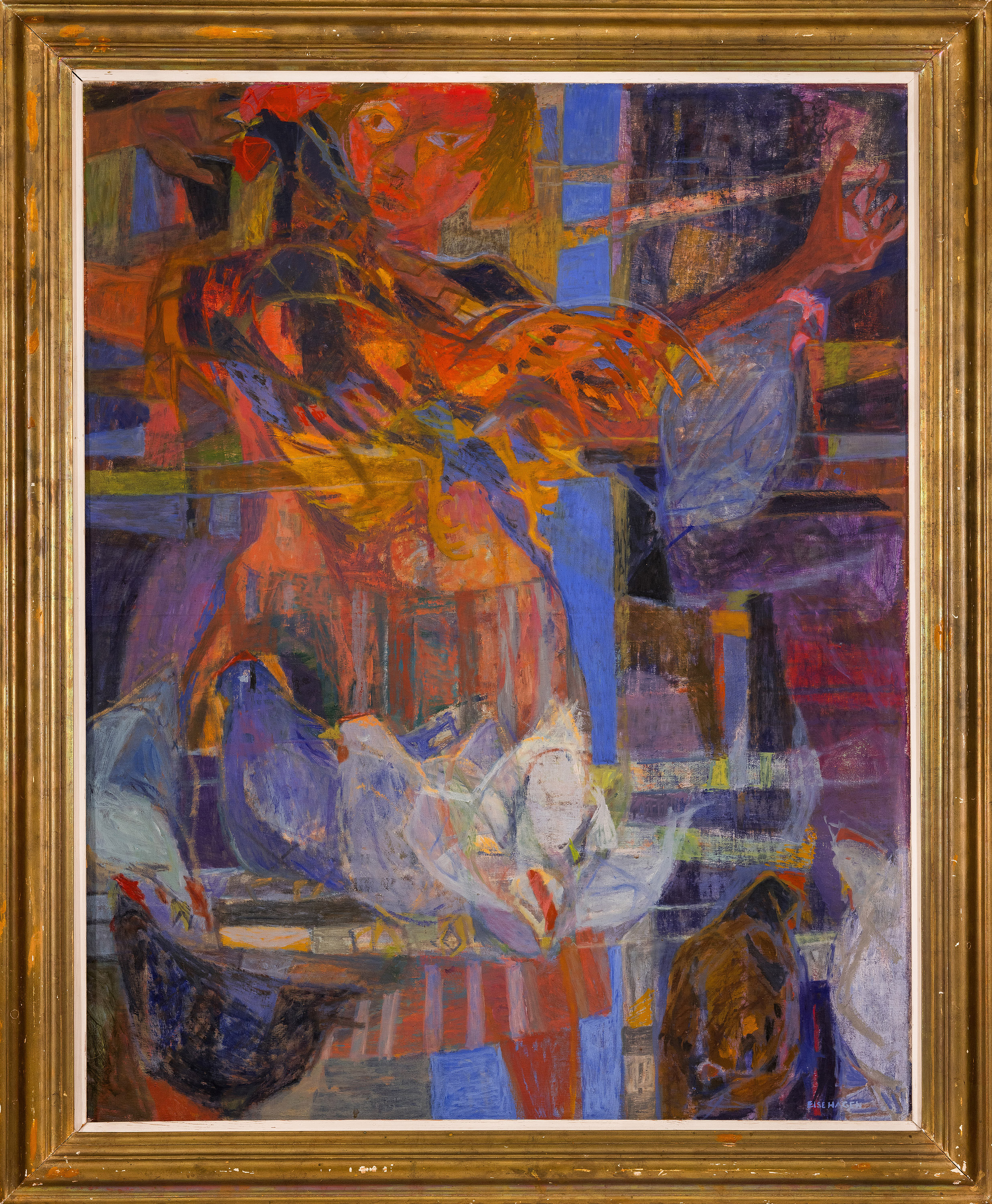
Else Hagen (1914–2010) often draws on everyday life for her pictures: people together, children at play, young women, families, and interiors. Yet it is not primarily the stories or the sitters that make her paintings so compelling. What holds the eye lies in the painting itself. Hagen handles colour, form, and plane in such a way that the eye is kept constantly in motion. The gaze travels through the picture, from figure to background, from light to shadow, from one field of colour to another. Nothing is entirely still. The composition creates a rhythm that leads the viewer onwards, so that new connections and details emerge.
In many of Hagen’s works, a tension arises between figure and space. The figures are not isolated motifs but form part of a larger interplay of lines, shapes, and colours. Backgrounds, furniture, windows, and architectural elements take on an active role in the composition. They help to create a pictorial space that appears both recognisable and, at the same time, somewhat unresolved. This way of constructing a painting means that the works can be experienced as more than depictions of a particular situation. They invite the viewer to explore how the painting is put together. Hagen’s art is therefore not only about what we see, but about how we see. Through the meeting of colours, the rhythm of the composition, and the gaze’s journey across the canvas, she opens up an active and sensory experience of the painting.