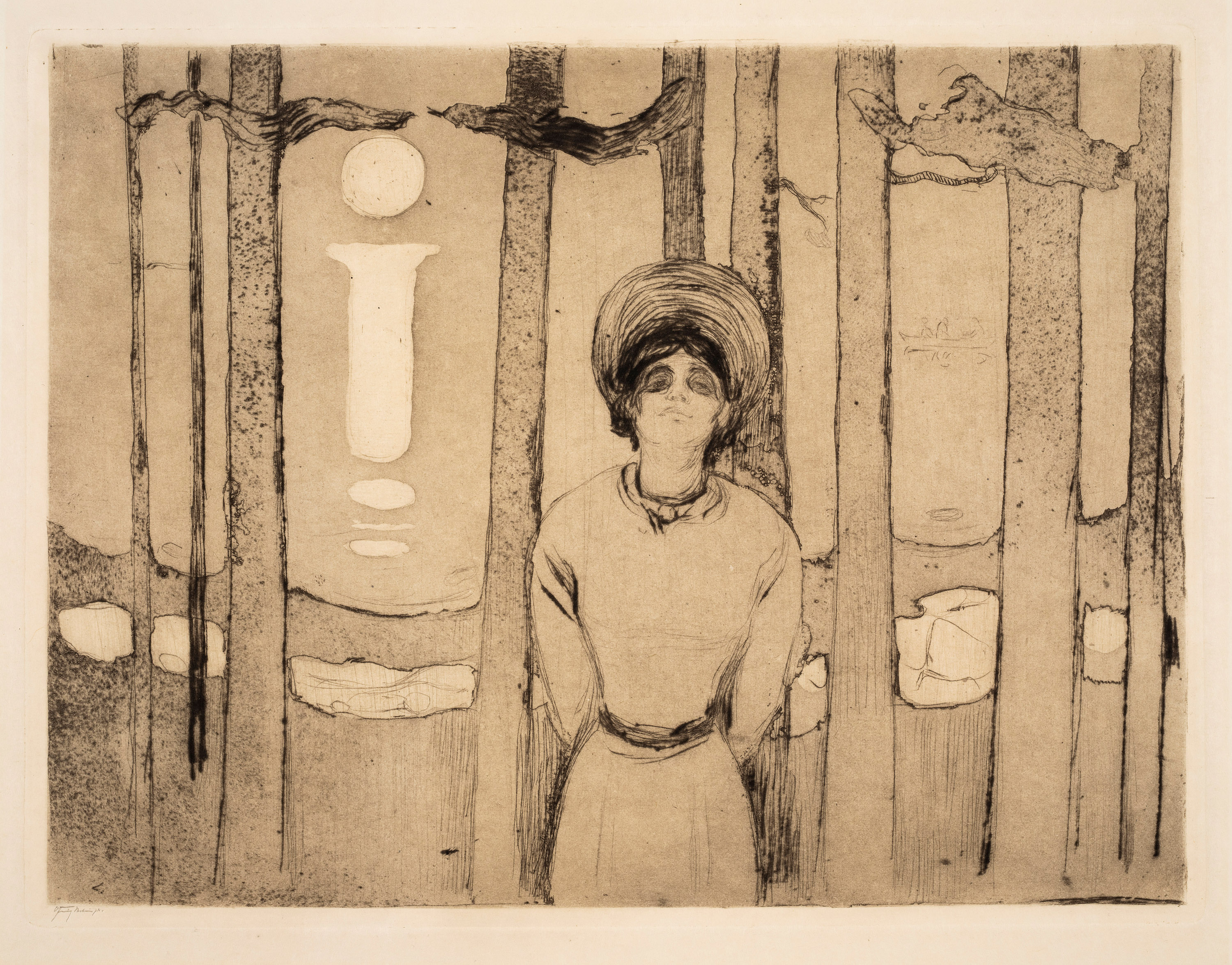
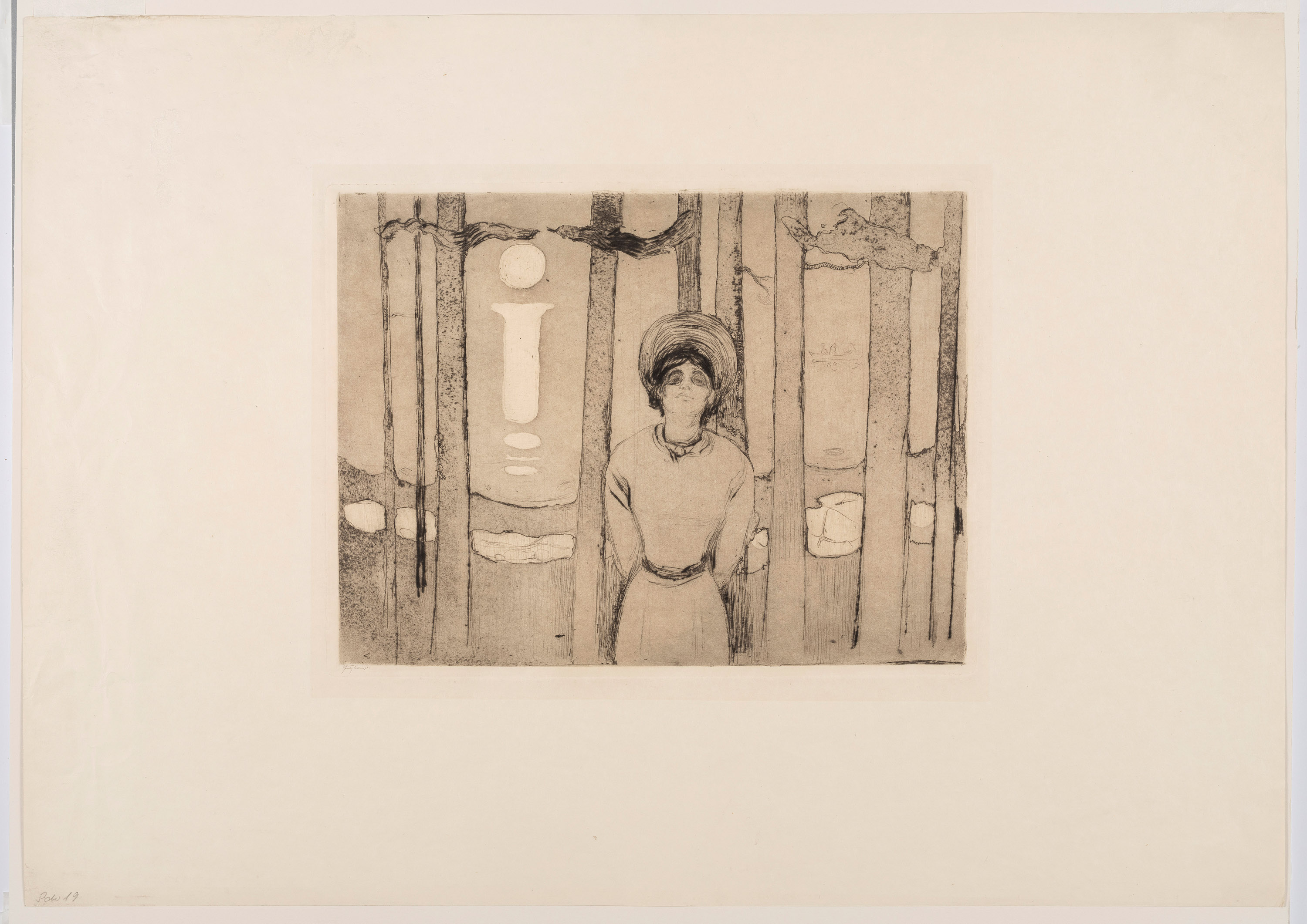
Summer Night. The Voice (1894)
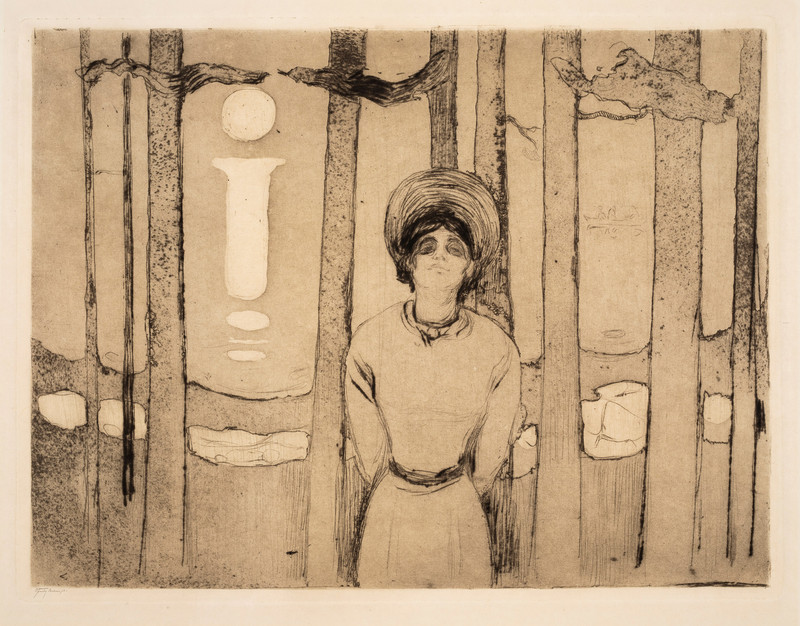
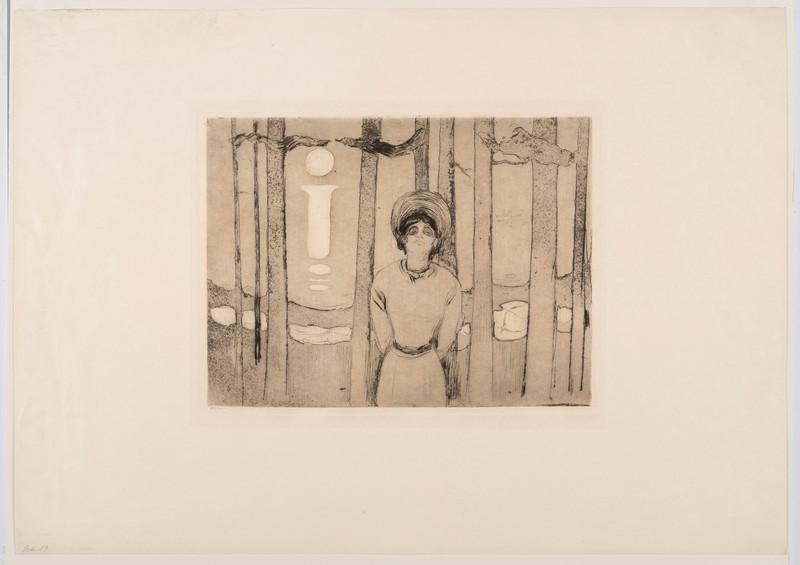
Edvard Munch’s Summer Night. The Voice (1894) belongs to the artist’s central body of motifs from the 1890s, later known as the Frieze of Life, in which he explores themes of love, desire, and loneliness. The motif of tree trunks obscuring the fjord, the female figure in the foreground, and the moonlight reflected on the water already appears in a more simplified, stylistic form in Munch’s drawings titled Summer Night from 1893.
Munch himself associated the motif with his first love, Milly Thaulow, and the image can be understood as a recollection tied to eroticism and desire. The infatuation must have left an impression, as Munch was still writing about the affair, referring to Thaulow as “Mrs. Heiberg” in his diaries as late as 1889.
Whether the motif derives directly from an early romantic experience or not, it becomes a recurring theme throughout Munch’s oeuvre. The image depicts a solitary woman standing among tall, vertical pine trees by the shoreline on a summer night. The tight composition, with its rhythmic tree trunks and horizontal shoreline, creates a sense of both structure and enclosure. The female figure is often interpreted as expressing an inner state rather than representing a specific individual. For this reason, scholars suggest that the figure can be read both literally and symbolically, as a person, but also as the very “voice” referred to in the title.
In several etchings from 1894, Munch experimented with variations of this motif, exploring details, hand-coloring, and compositional strategies. In 1896, he made use of the possibilities of woodcut, producing color prints based on his well-known “jigsaw” technique, which allowed multiple colors to be printed in a single process. The motif also exists as paintings from 1893 and 1896; the latter was retained by Munch and later bequeathed to the municipality of Oslo. Today, the painting is part of the collection of the Munch Museum.